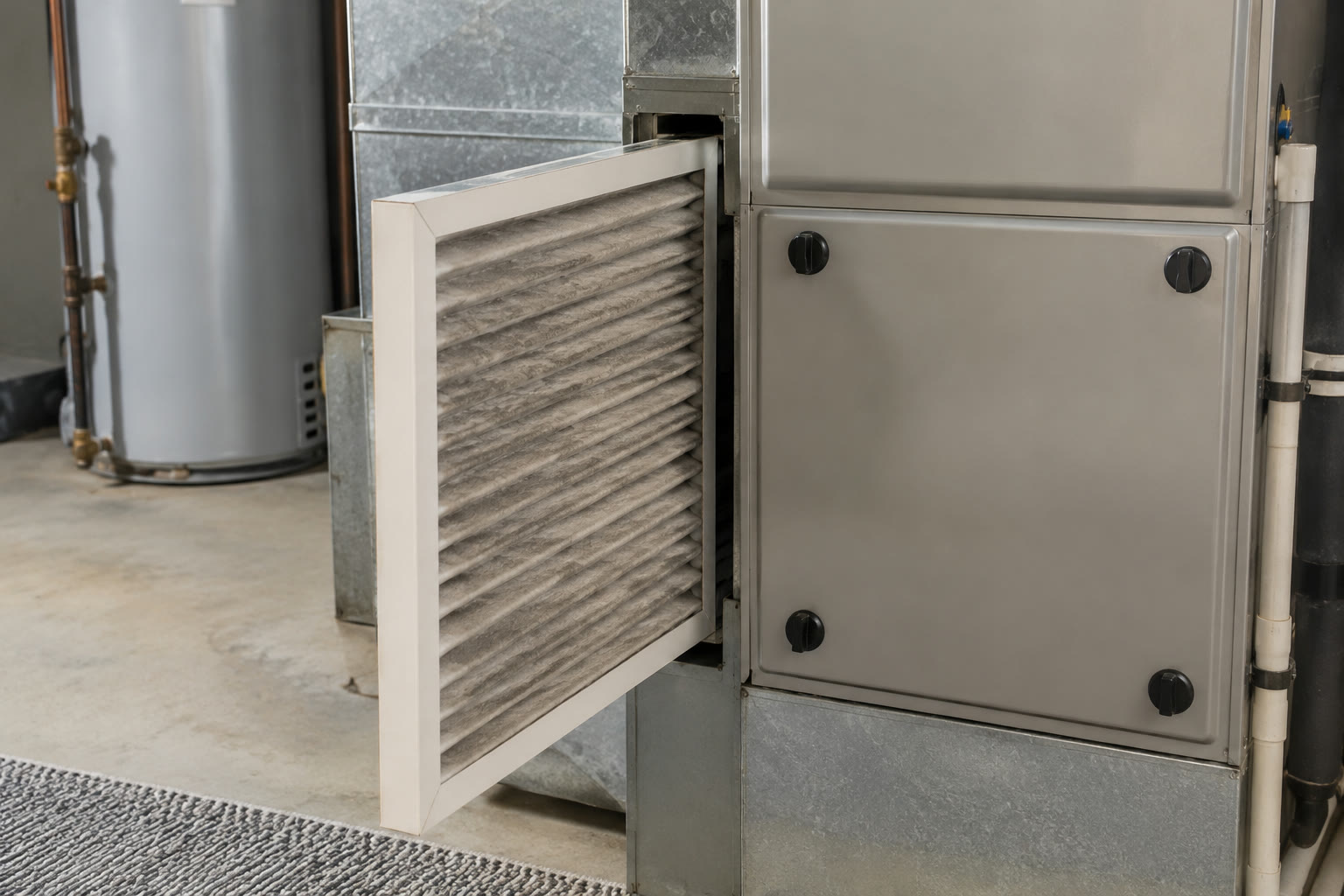
Use the right filter for the equipment
Read the required dimensions, filter type and maintenance instructions. Disposable and reusable filters have different care requirements. The photograph shows a pleated disposable design; it does not identify the filter required by your model.
Avoid stacking filters, bending them to fit or adding a second filter at a return unless the system is designed for it. Ask about airflow compatibility when changing filtration.
During wildfire smoke
The EPA indoor filtration guide recommends efficient filtration and checking which filter the system can support. Its MERV 13 guidance includes that equipment compatibility condition. Ask the manufacturer or a qualified HVAC technician before upgrading a restrictive filter.
Check AirNow for current air-quality information and local alerts. Conditions can change while a printed seasonal summary stays the same.
When airflow changes after a filter change
Record the old and new size, rating and type, along with when the symptoms began. A new filter and a developing blower fault can happen at the same time; the timing helps, but does not settle the diagnosis.
If the furnace starts cycling or airflow drops, use the weak airflow page. Do not keep changing controls to force a malfunctioning unit to run.
What filtration cannot fix
An air filter does not repair ignition, venting or electrical faults. It is not protection against a gas leak or a reason to stay inside when an alarm sounds. A safe heating system and appropriate indoor filtration are separate requirements.
Keep maintenance dates with the equipment records. If access to a filter requires a crawl space or opening a compartment, arrange qualified help rather than assuming every online filter-change guide applies to your installation.
Let’s get to the source of the heating problem.
Tell us where you are and what happens when you request heat. Gas, electric and condensing residential furnaces.
Have your ZIP code and furnace symptom ready.